Related: How to Clean a Yoga Mat Without Stripping the Top Layer and Yoga Mat Thickness, Measured: What the Box Does Not Tell You
I teach vinyasa and a Thursday-night recovery class in Portland, and I have spent years logging what happens to non-slip yoga mats between the first sun salutation and the last one. Not the marketing version. The real version: which mats still hold when the room hits 95 degrees and every palm in it is wet, and which ones turn into a slip-and-slide by minute 40. The four mats below are the ones I would actually put in front of a student, and every link in this guide is an affiliate link, which means I earn a small commission if you buy through one. That is the disclosure, and I would rather put it in the first paragraph than bury it at the bottom.
Here is what most buyers get wrong. Grip is a chemistry problem, not a texture problem. A mat with a deep, grippy-looking pattern can still be the slickest thing in the room, because what decides whether your hand slides is what the top layer is made of, not how bumpy it looks. Polyurethane tops grip best when wet. Natural rubber grips beautifully when dry or barely damp and behaves like a sponge once you pour sweat on it. PVC is cheap and durable and usually the worst of the three the moment moisture shows up.
The useful number in my log is what I call the slick-sweat threshold: the class minute when grip gives out in a hot room. Good mats do not have one. Cheap mats find theirs somewhere around minute 25, which is exactly when you are balancing on one leg and least interested in surprises.
What "non-slip" should mean on a spec sheet
Brands love the words "non-slip" without the qualifier "when dry" anywhere on the box. That qualifier is the whole story. A mat that grips a dry palm and a mat that grips a wet palm are two different products built from two different top layers, and only one of them belongs in a hot room.
So before you buy, ask three questions. What is the top layer made of, and does the brand say anything about wet grip specifically? How thick is the mat, and is that number measured at the thickest point or the thinnest edge? And how does the mat behave on the floor you actually practice on, because mat drag, which is corner curl and edge lift, is what makes a mat dangerous on a smooth studio floor.
That third one gets ignored constantly. A mat that curls at the corners is a trip hazard in a packed class, no matter how good its top layer is. I have watched students go down because of a lifted edge, not a wet palm.
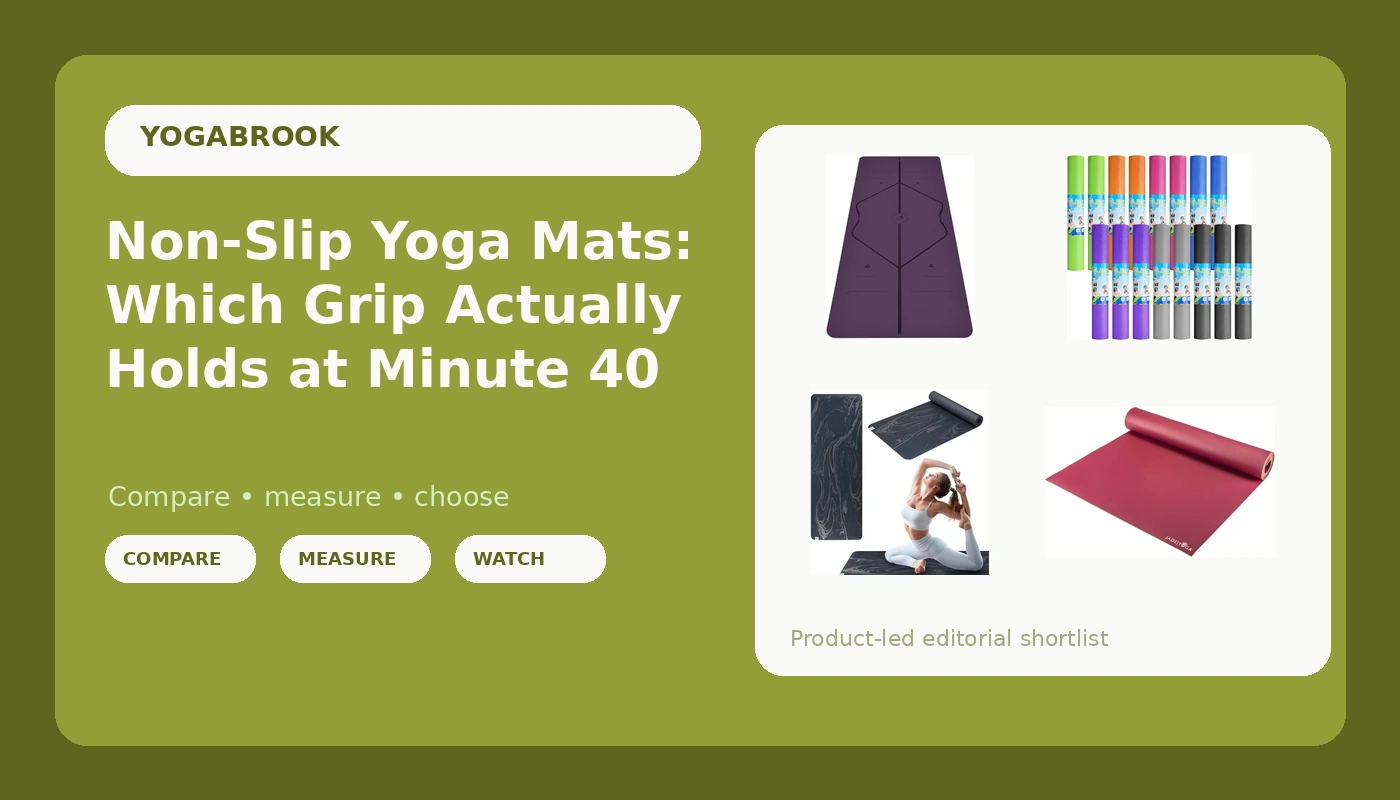
Best Overall: Liforme Classic Yoga Mat
If you have ever watched a whole class creep forward over an hour, you already understand why the alignment design matters. The etched markings show you where your hands and feet belong, so you can feel your placement instead of craning your neck to check it. For anyone rebuilding a practice after an injury, that feedback loop is worth more than any cushioning claim.
The real story, though, is the top layer. Liforme's GripForMe surface is the best wet grip I have found in the category, and it keeps working as the room heats up instead of letting go at minute 40. If you practice hot, this is the surface that decides the question for you.
The trade-offs are honest ones. That top layer is delicate. It scuffs, it picks up marks, and it does not enjoy being dragged across a parking lot or folded into a backpack with keys in it. Treat it like a tool you intend to keep, roll it, carry it in a bag, and it will reward you. Check the current price before you commit, because this sits at the top of the category and you should know that going in.
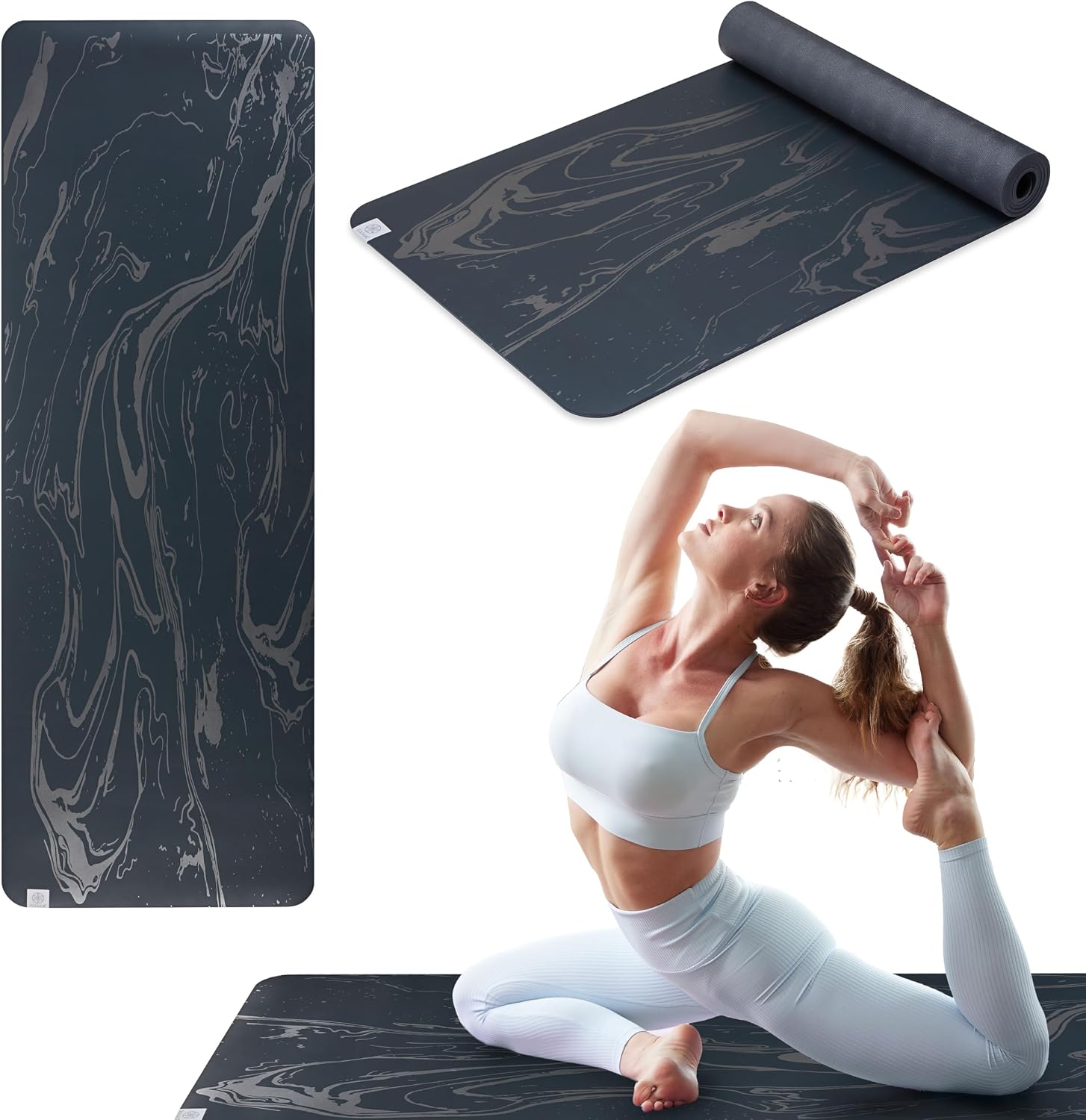
Best for Hot Yoga: Gaiam Dry-Grip Yoga Mat
Gaiam's everyday mats are the ones I tell beginners to buy, and the Dry-Grip is the version I point at when the student's problem is sweat rather than cushioning. The top layer is built for wet palms, which is the exact issue that sends most mats to the community shelf in a hot room.
It rolls out flat, it is easy to live with, and it does not ask you to baby it the way a coated polyurethane mat does. That matters more than people admit. A mat you actually unroll on a Tuesday beats a mat you are afraid to touch.
Two habits keep this mat working. First, wash it regularly, because a greasy top layer loses grip no matter what it is made of. Second, give it a minute to dry before you fold it up, since trapped moisture is what turns a good mat into a smelly one. Do both and this is a genuinely reliable hot-room mat for a fraction of what the premium options cost.
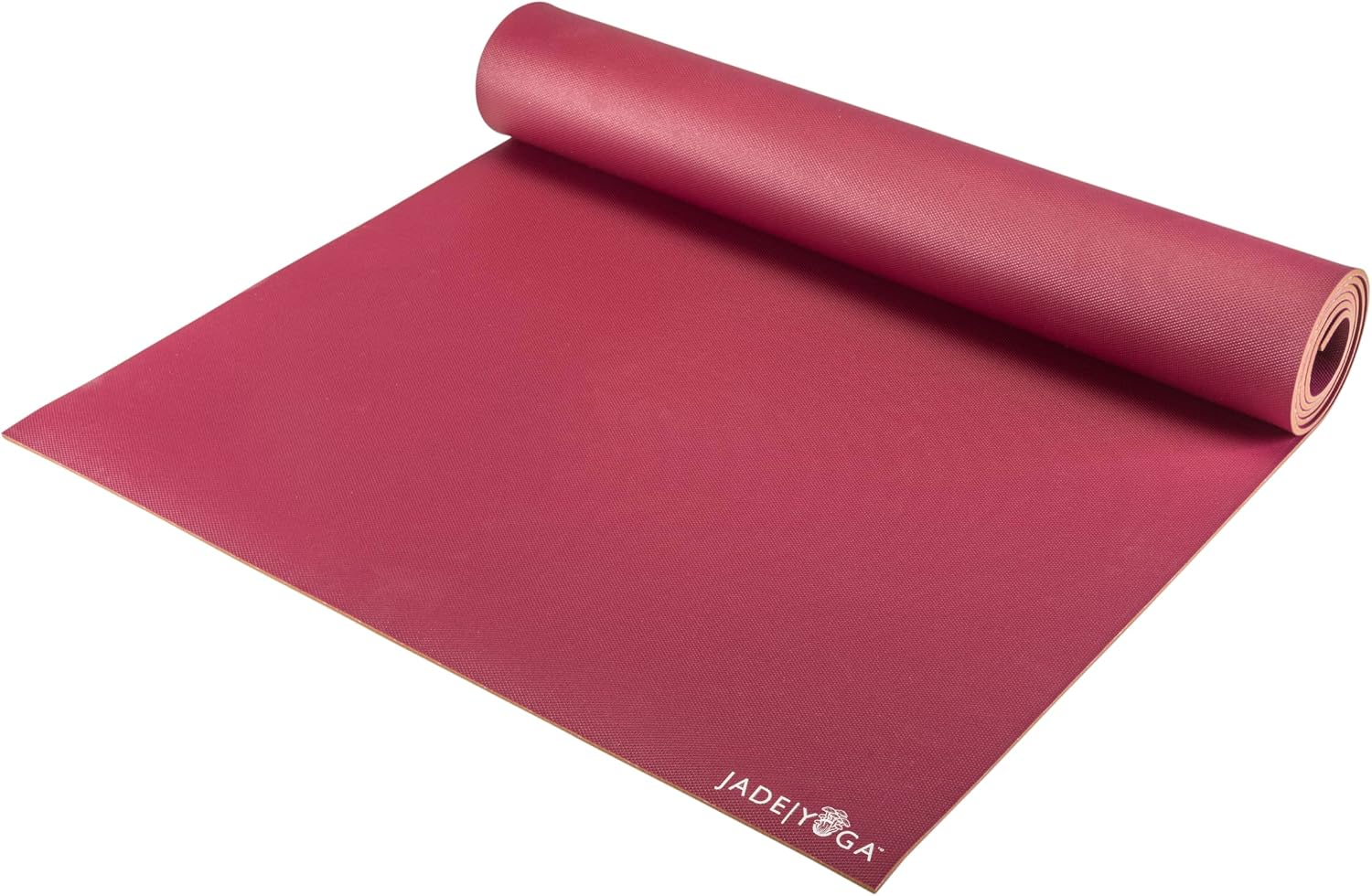
Best Natural Rubber: JadeYoga Mushroom Yoga Mat
If your knees are the reason you are shopping, start here. This is a thick mat with a natural rubber base, and the grip comes from the rubber itself rather than from a coated top layer that wears away. That is a meaningful difference. Natural rubber has no break-in tax, the way some premium mats do. It grips from the first class, dry or barely damp, and it is made from tree rubber rather than petroleum.
The catch is moisture. Rubber absorbs sweat and oil, and a rubber mat that never gets cleaned will eventually hold onto both. Mine have taught me to wipe them down after every hot class and to let them air out fully before rolling. Do that and the grip stays honest for years.
The other honest note is the sink factor. All that cushion is wonderful for knees, wrists, and floor work, and it costs you a little stability in standing balances, because your palms and feet compress into the surface instead of meeting something firm. If you have bad knees and you mostly practice slower, restorative, or floor-based sequences, the trade is worth it. If you are chasing long holds on one leg, you will feel the difference.
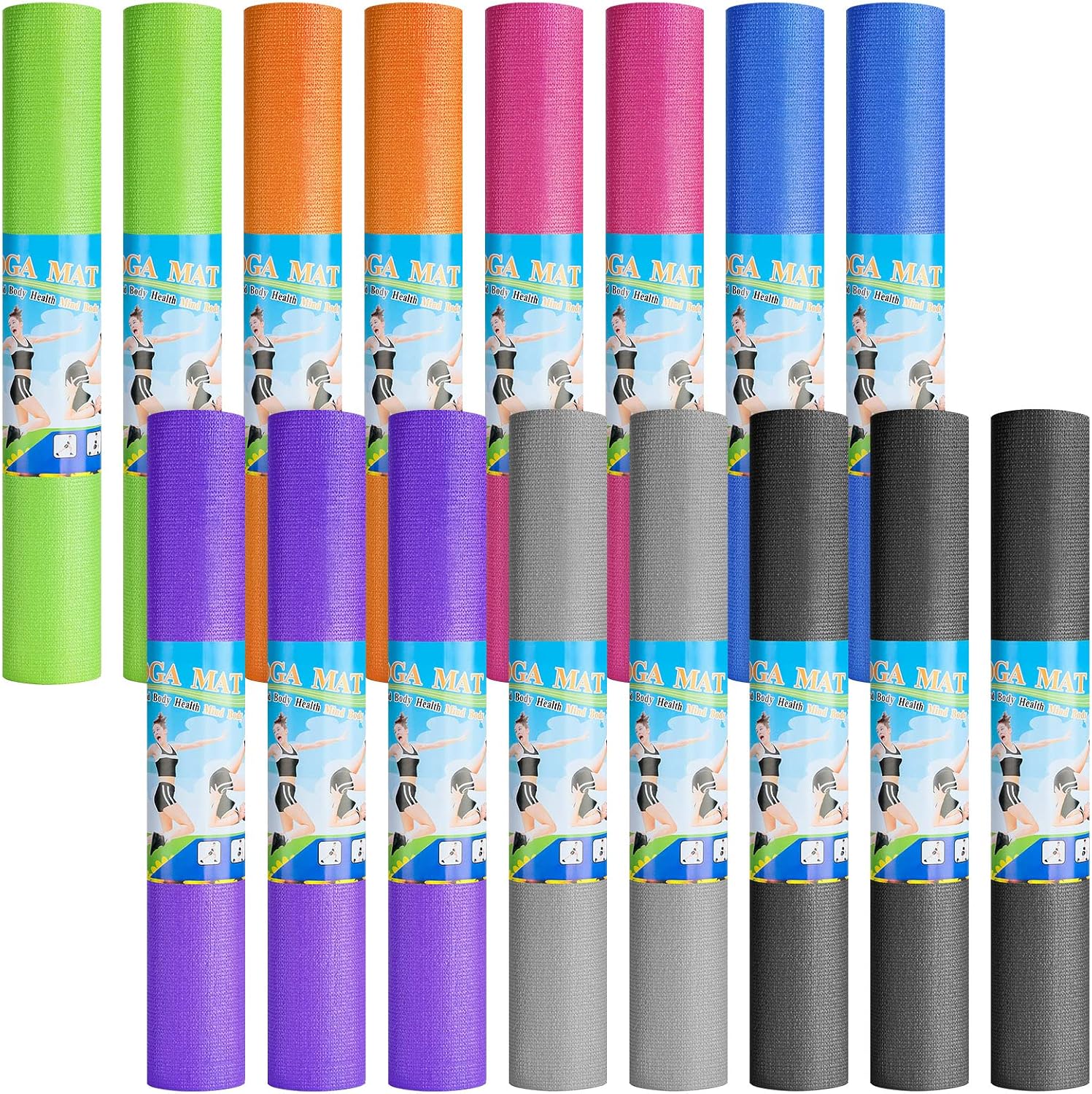
Best for Studios and Sharing: Funtery 3 mm Thin Yoga Mats Bulk
This is the studio mat, the lending mat, the retreat mat, the mat you buy when six people are coming to your house and only two of them own anything. It is a 3 mm mat at 68 by 24 inches, sold as a bulk pack, and that combination is exactly what a teacher needs: thin enough to stack flat and carry a dozen at a time, standard enough that nobody falls off the edges.
Thin mats are underrated. Three millimeters puts you close to the floor, which is genuinely better for balance, for standing poses, and for learning where your weight actually is. What you give up is cushioning, and if your knees complain on hard floors, this is not the mat you want for a long floor series.
One thing to check before you buy a stack: the top layer. A thin mat's grip depends entirely on what the surface is made of, so test one dry and then with wet hands before you commit to a case. If it holds both ways, you have found a workhorse. If it goes slick when damp, you have found a stack of mats that will live at the back of the closet.
How I evaluate a mat
The calipers come out before the mat does. I measure thickness at six points across the surface, because the number on the box is usually taken at the thickest point and the edges are where a mat actually fails. Anything more than a millimeter of caliper gap between the claim and the thinnest edge tells you what kind of company you are dealing with.
Then the inclined-plane slip test, dry and wet. I raise a weighted board until the weight slides, and I record the angle in degrees. It is a crude test and it is still more honest than any "non-slip" claim printed on a package, because it gives me a number to compare against the next mat.
After that, I roll it out and watch for mat drag, meaning corner curl and edge lift, on the actual floor I teach on. Finally, the long part: classes. My rule for ranking a mat in a roundup is a long log of real classes behind it, and my rule for recommending one is simpler. Would I hand this to a student in my own class, on a Tuesday, and expect them to be safe? That is the test every mat in this guide passed.
Analysis: the four trade-offs that actually matter
The four mats here are not four versions of the same thing. They are four answers to four different problems, and the differences come down to top-layer chemistry, cushioning, and how much maintenance you are willing to do.
Top layer first. The Liforme's polyurethane-style surface wins on wet grip, which is why it is the mat I would choose for a hot room and the mat I would warn you to protect. The Gaiam's dry-grip treatment is the pragmatic middle: designed for sweat, easier to live with, less precious. The JadeYoga relies on natural rubber, which is the best dry grip of the group and the one that needs the most care, because rubber holds onto whatever you leave on it.
Cushion second. Thickness is a trade, not a feature. Every millimeter of foam that saves your knees makes standing balances slightly harder, because you sink instead of pressing. The JadeYoga sits at the cushioned end, the Funtery at the thin end, and the other two in between. My dancer's knees and my flooring brain argue about this in every review I write, and the resolution is always the same: match the mat to the practice, not to the spec sheet.
Durability third. A mat you keep for five years beats a mat you replace every two, even if the five-year mat costs more up front. That is the whole reason I care about caliper gaps and top layers. Cheap is only cheap if you never rebuy.
Maintenance fourth, and it is the one nobody wants to hear. Every mat in this guide will lose grip if you never clean it. Sweat, oil, and studio floor residue all sit on the surface and quietly undo the chemistry you paid for. Wash your mat. Dry it fully. Roll it, do not fold it.
The comparison table
| Mat | Best for | What sets it apart | Price |
|---|---|---|---|
 Visit on Amazon → Visit on Amazon →Liforme Classic Yoga Mat |
All-around practice with alignment feedback | GripForMe top layer plus patented alignment markings | $165.00 |
 Visit on Amazon → Visit on Amazon →Gaiam Dry-Grip Yoga Mat |
Hot yoga and sweaty palms | Dry-grip top layer built for wet hands | $49.94 |
 Visit on Amazon → Visit on Amazon →JadeYoga Mushroom Yoga Mat |
Knees, wrists, and floor work | Thick natural rubber with grip from the rubber itself | $119.95 |
 Visit on Amazon → Visit on Amazon →Funtery 3 mm Thin Yoga Mats Bulk |
Studios, retreats, and shared spaces | Thin 3 mm build at 68 by 24 inches, sold in bulk | $129.99 |
Should you buy the Liforme Classic Yoga Mat?
Yes, if wet grip and alignment are the two things your current mat is failing at. The markings keep you honest about hand and foot placement, and the top layer holds when the room heats up. Just go in knowing you are buying a delicate surface at a premium price, and that it wants a bag and a gentle hand. For a hot-yoga regular, that is a fair deal. For someone who wants to throw a mat in the trunk and forget about it, it is not.
Should you buy the Gaiam Dry-Grip Yoga Mat?
Yes, if sweat is your problem and you want a mat that does not require special handling. The dry-grip top layer is aimed squarely at hot rooms, it rolls flat, and it is the mat I would point a beginner toward before they spend at the top of the category. Wash it, dry it fully, and it will serve you well.
Should you buy the JadeYoga Mushroom Yoga Mat?
Yes, if your joints are making the decision for you. Thick natural rubber gives you the cushion that bad knees and wrists ask for, and the grip comes from the material rather than a coating that can wear off. Accept the maintenance and the slightly softer standing balance, and it is a mat you will keep for a long time.
Should you buy the Funtery 3 mm Thin Yoga Mats Bulk?
Yes, if you are equipping a room rather than a person. Thin mats stack flat, put you close to the floor, and the standard 68 by 24 inch size fits everyone. Test one wet before you commit to the case, because a thin mat lives or dies by its top layer.
What I would actually tell a student
If you practice hot and you are tired of sliding, buy the Liforme and treat the top layer with respect. If you want a mat that handles sweat without a special ritual, buy the Gaiam Dry-Grip. If your knees are the reason you are reading this, buy the JadeYoga. And if you are the person everyone borrows a mat from, buy the Funtery pack and stop lending out your own. Any of the four will do the job. The one that will not do the job is the mat sitting rolled up in the corner because you never unrolled it.